IVF Lab Software September 18, 2026
Nineteen indicators, each with its own competency minimum and benchmark aspiration. What they mean, what sitting below the line signals, and what to do.
 Preeti Pamecha
 6 min read 
IVF EMR Software September 14, 2026
Vendors describe integration as something done to your clinic. Some of it is done by your clinic. What each side owns across discovery, validation and go-live.
 Ravi Chhajed
 8 min read 
IVF Lab Software September 8, 2026
Analysers, incubators, witnessing hardware, imaging, PGT labs. What each interface actually carries, which direction it flows, and where clinics get surprised.
Ravi Chhajed 8 min read 
IVF EMR Software September 3, 2026
Clinicians fear the AI inventing things. The evidence says it mostly leaves things out — and omission is far harder to catch on review.
 Prashant Talesara
 7 min read 
IVF Lab Software August 18, 2026
Traceability spans four systems, not one. What the EMR holds, what witnessing and QMS tools own, and where the handoffs quietly fail an audit.
Ravi Chhajed 8 min read 
IVF EMR Software August 14, 2026
Same-sex couples, solo parents and donor arrangements break a single-patient record model. What the EMR has to hold — and where clinics improvise.
Preeti Pamecha 8 min read 
IVF EMR Software August 10, 2026
A package is one payment and many services. Billing software that cannot see clinical milestones cannot tell you what has been earned, consumed or owed.
Ravi Chhajed 6 min read 
IVF EMR Software August 5, 2026
Most clinics price cycles at a flat rate and never learn what one actually costs. What activity-based costing exposes, and why scale changes the maths.
Prashant Talesara 6 min read 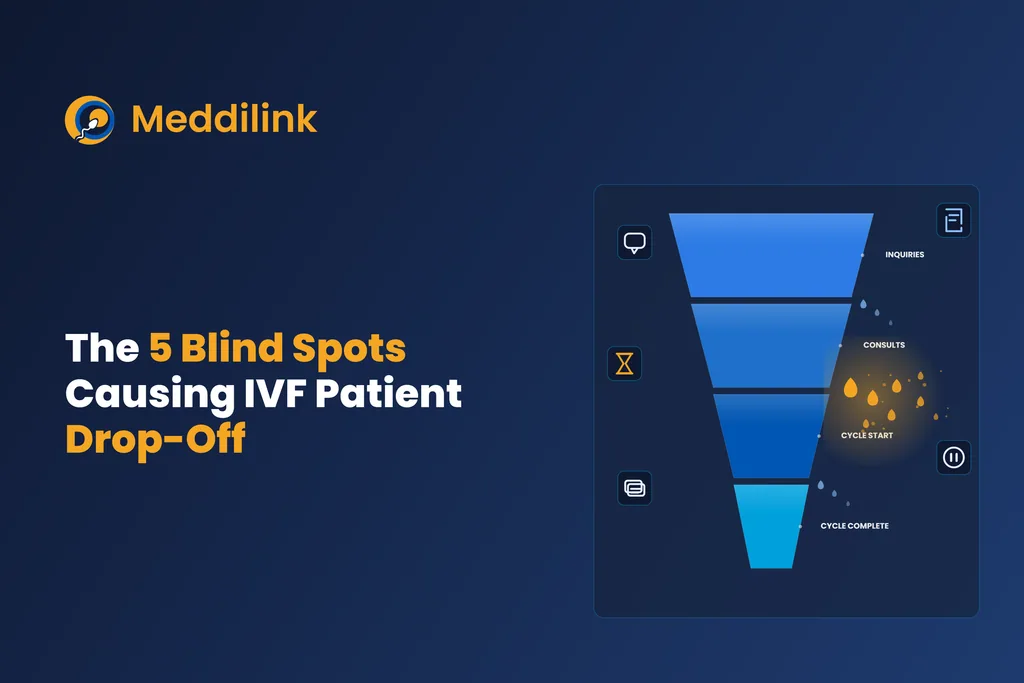
Patient Education July 23, 2026
Fertility clinics estimate 30–40% of patients drop off between consult and first cycle. Five specific blind spots — and how a connected stack catches them.
Prashant Talesara 9 min read 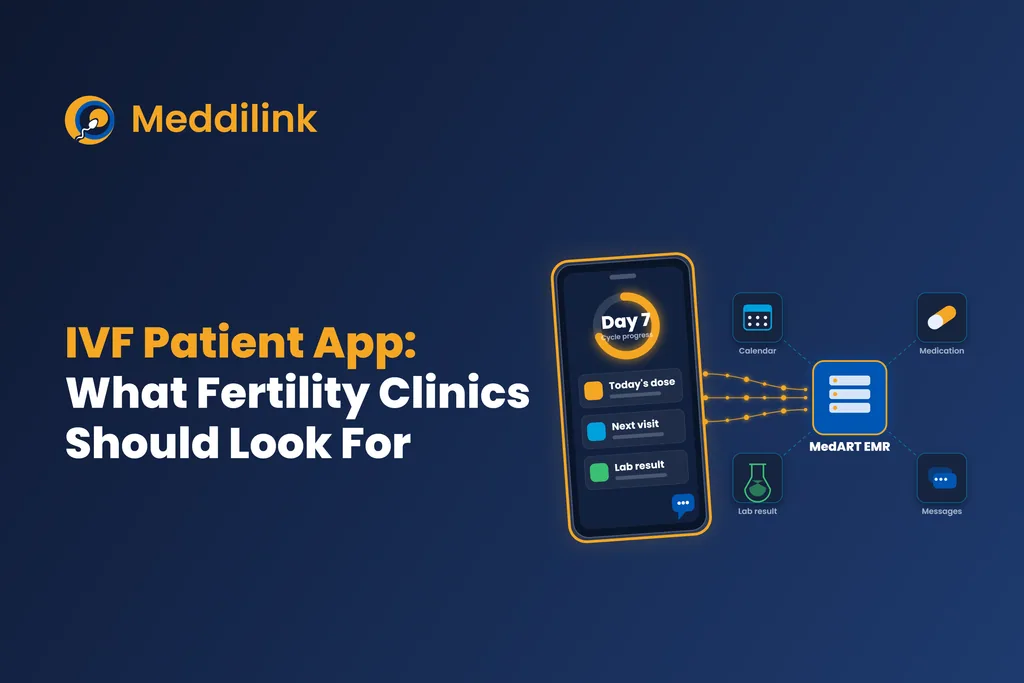
Patient Education July 20, 2026
Why the IVF patient app is becoming a strategic product for fertility clinics — adherence math, multi-language reach, and how to choose one built for IVF.
Preeti Pamecha 9 min read 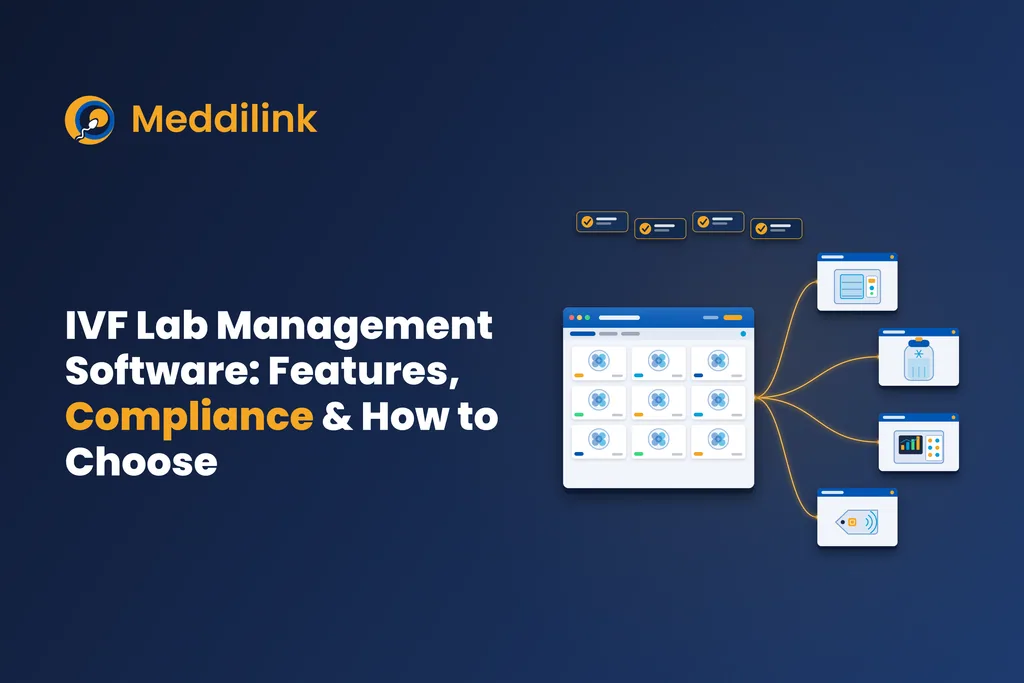
IVF Lab Software July 15, 2026
Must-have features for embryology and andrology, the compliance essentials (SART, HFEA, CAP, NABL), and how to evaluate an IVF lab system.
Preeti Pamecha 11 min read 
Digital Health July 13, 2026
Meddilink's team on the three shifts that defined ESHRE 2026 — AI maturing into a practical tool, evidence-based IVF, and the move to one connected platform.
Prashant Talesara 5 min read 
AI in IVF July 9, 2026
The 9 messaging signals that separate fertility clinics converting new inquiries from those losing them. IVF patient communication as a conversion lever.
Preeti Pamecha 10 min read 
Digital Health Updated August 24, 2026
Where IVF technology actually stands in 2026 — AI adoption trends, results clinics are seeing, and what's coming by 2030. A Meddilink co-founder's industry read.
Prashant Talesara 11 min read 
IVF EMR Software July 3, 2026
How fertility clinics should choose IVF management software in 2026 — features that matter, buyer criteria, and what most 'best of' articles miss.
Preeti Pamecha 13 min read 
IVF EMR Software Updated September 10, 2026
Two clinics with identical talent, different outcomes. How evidence from connected data beats individual experience as IVF scales — and why it matters now.
Prashant Talesara 11 min read 
AI in IVF Updated August 25, 2026
IVF notes get written three ways: typed, dictated, or captured by an AI scribe. A side-by-side comparison of time, completeness, and structured output.
Preeti Pamecha 9 min read 
AI in IVF Updated August 25, 2026
An AI medical scribe for IVF captures the consultation and writes structured notes into the EMR in real time. How it works, the evidence, and what IVF needs.
Preeti Pamecha 14 min read 
IVF EMR Software Updated September 12, 2026
Managing ovarian stimulation across multi-provider clinics is a governance challenge as much as a clinical one. Here's how purpose-built IVF EMR software solves it.
Ravi Chhajed 7 min read 
Digital Health February 11, 2026
Where IVF regulation in the Philippines stands in 2026: PSRM guidance, DOH accreditation, and the record-keeping clinics need to support both.
Prashant Talesara 5 min read 
IVF EMR Software February 3, 2026
Philippine fertility clinics are adopting EMR and AI together. What is driving it, what changes for patients and clinicians, and where rollouts stall.
Ravi Chhajed 5 min read 
AI in IVF January 29, 2026
How AI and EMR data support clinical decisions in IVF, from decision support at the point of care to protocol review across cycles.
Prashant Talesara 9 min read 
IVF EMR Software January 23, 2026
What fragmented data looks like in an IVF clinic, why separate EMR, lab and billing systems fail at scale, and what a connected platform requires.
Ravi Chhajed 9 min read 
IVF EMR Software January 15, 2026
How a multi-site Kazakh IVF network replaced its legacy systems: fragmented records, manual lab entry, paper consent, and no view across branches.
Ravi Chhajed 8 min read 